
What to Eat in Chiang Mai: Khao Soi, Hang Le and Northern Thai Food
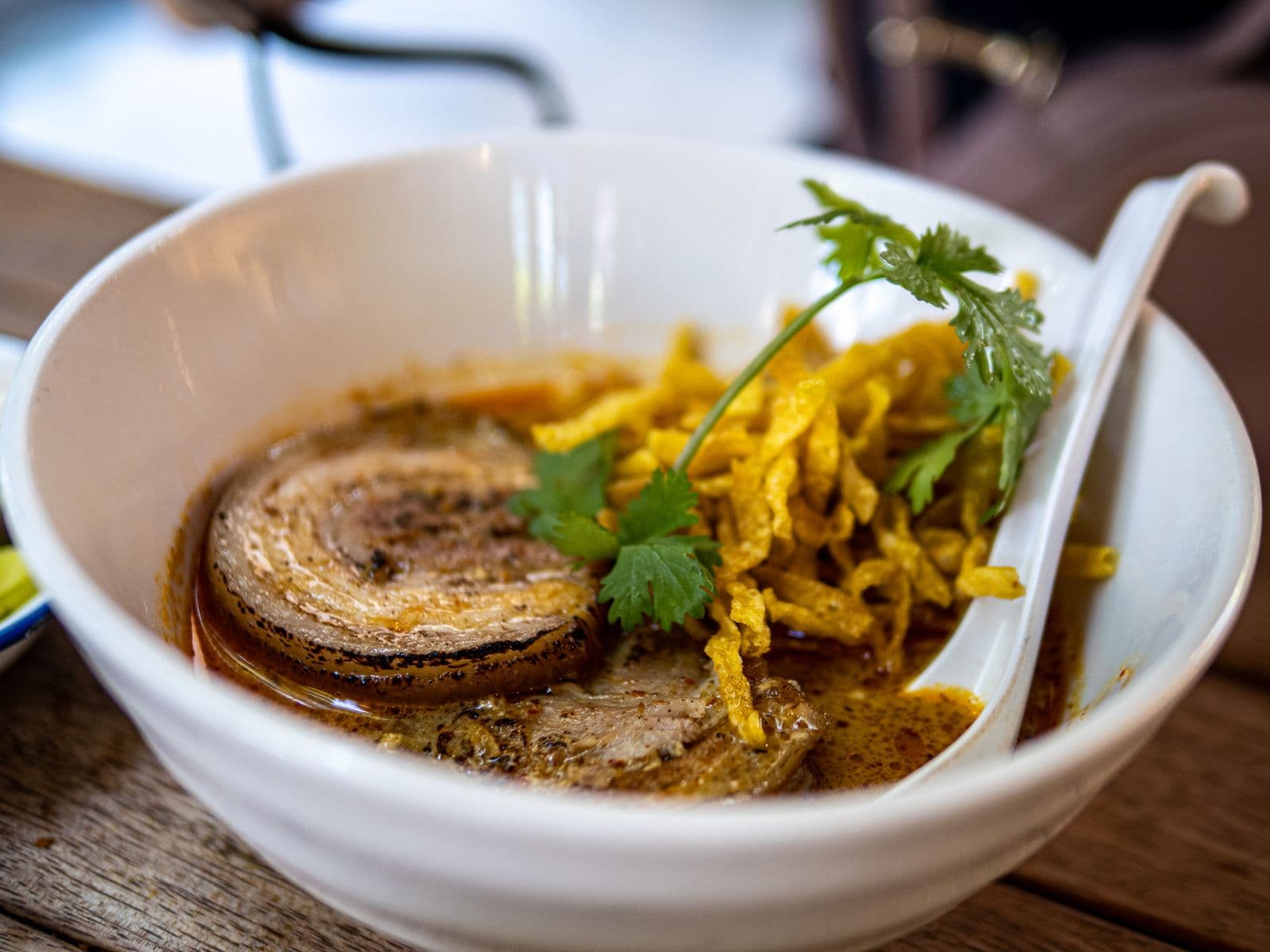
Photo by Likeboss lertpongsaporn / Pexels
On your first morning in Chiang Mai, the air is still cool enough that you tug your sleeves down over your hands. The smell of curry paste frying in coconut milk drifts out of a wooden shophouse beside a temple. A big pot bubbles out front, and the cook ladles brick-orange curry over egg noodles, then crowns the bowl with a fistful of crispy fried noodles. That scene explains better than any ad why people travel north purely to eat. Chiang Mai isn't just about khao soi, though — its kitchens have blended Burmese, Shan and Yunnanese influences for centuries. This guide follows a full day of eating, from the first bowl of the morning to late-night snacks, and tells you honestly what's worth queuing for and what you can skip without regret.
Your First Bowl of Khao Soi: When to Go and How to Order It Like a Local
The first rule visitors break is hunting for khao soi at 3 p.m. Many traditional khao soi shops open in the morning and sell until the pot runs dry, which on some days happens before the afternoon. Late morning to lunchtime is the sweet spot. Most places let you choose chicken, beef or pork; we recommend the chicken drumstick for your first bowl, because the slow-simmered meat soaks up the curry completely, while stewed beef suits anyone who likes a deeper, heavier flavor. Don't ignore the little side plate either: pickled mustard greens, shallots and lime. Squeeze in a little lime, add about half the pickles and shallots, and stir — the sour, salty crunch cuts through the richness of the coconut and brings the whole bowl into balance, the way northerners actually eat it. Want more heat? Ask for roasted chili oil, but taste first — some shops already make it plenty spicy in the pot.
Warorot and Ton Lamyai Markets: The City's Open Kitchen
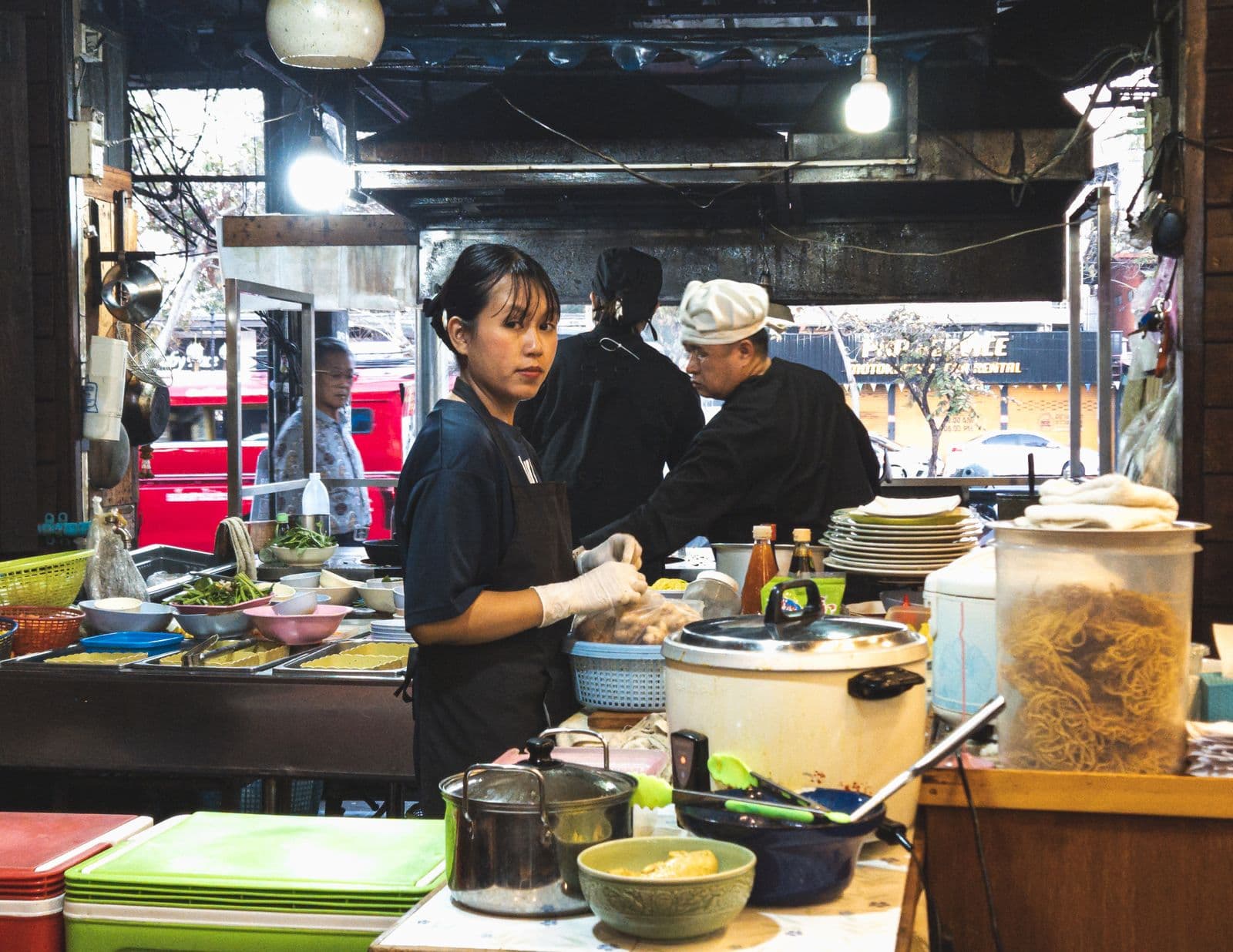
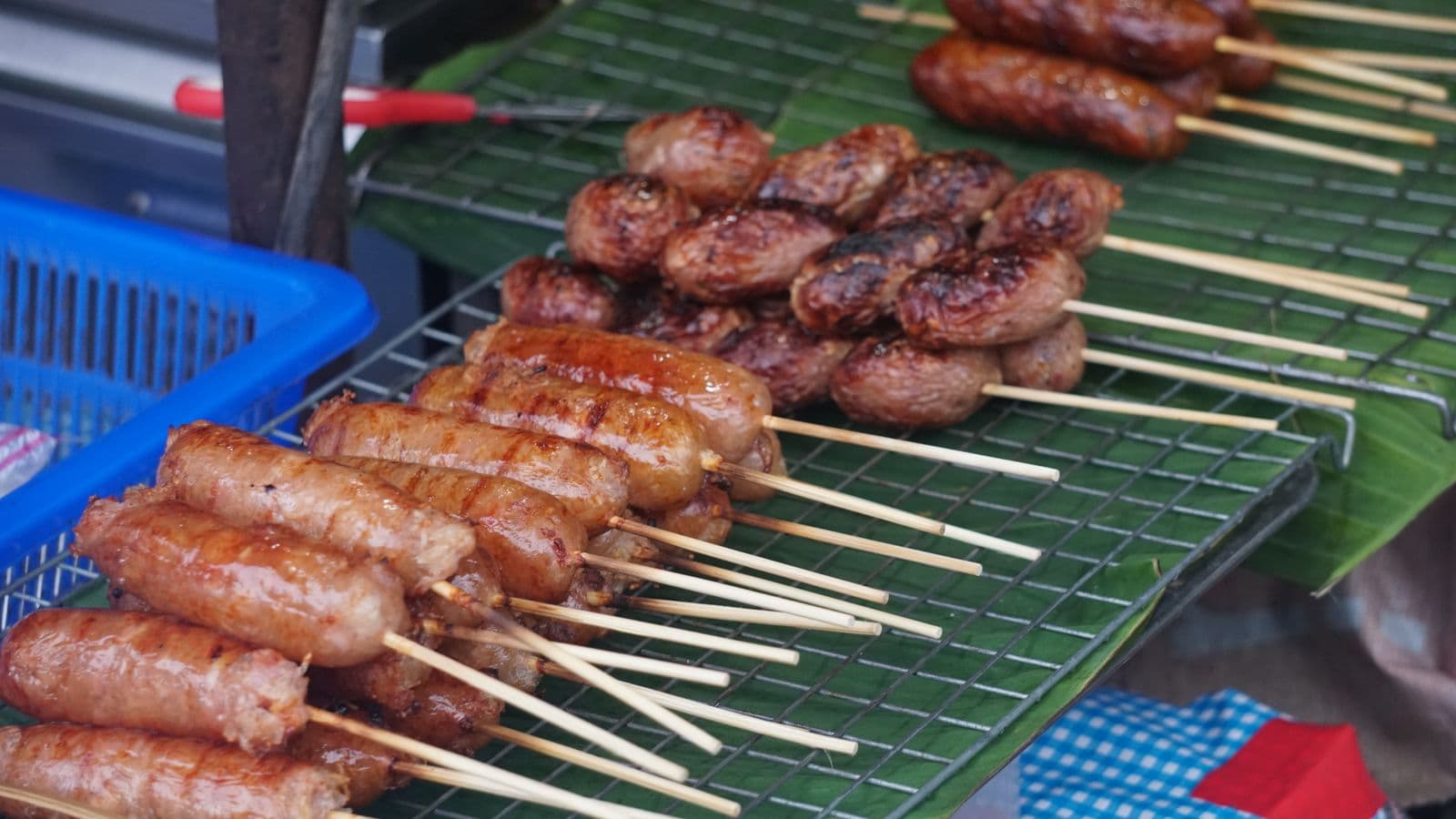
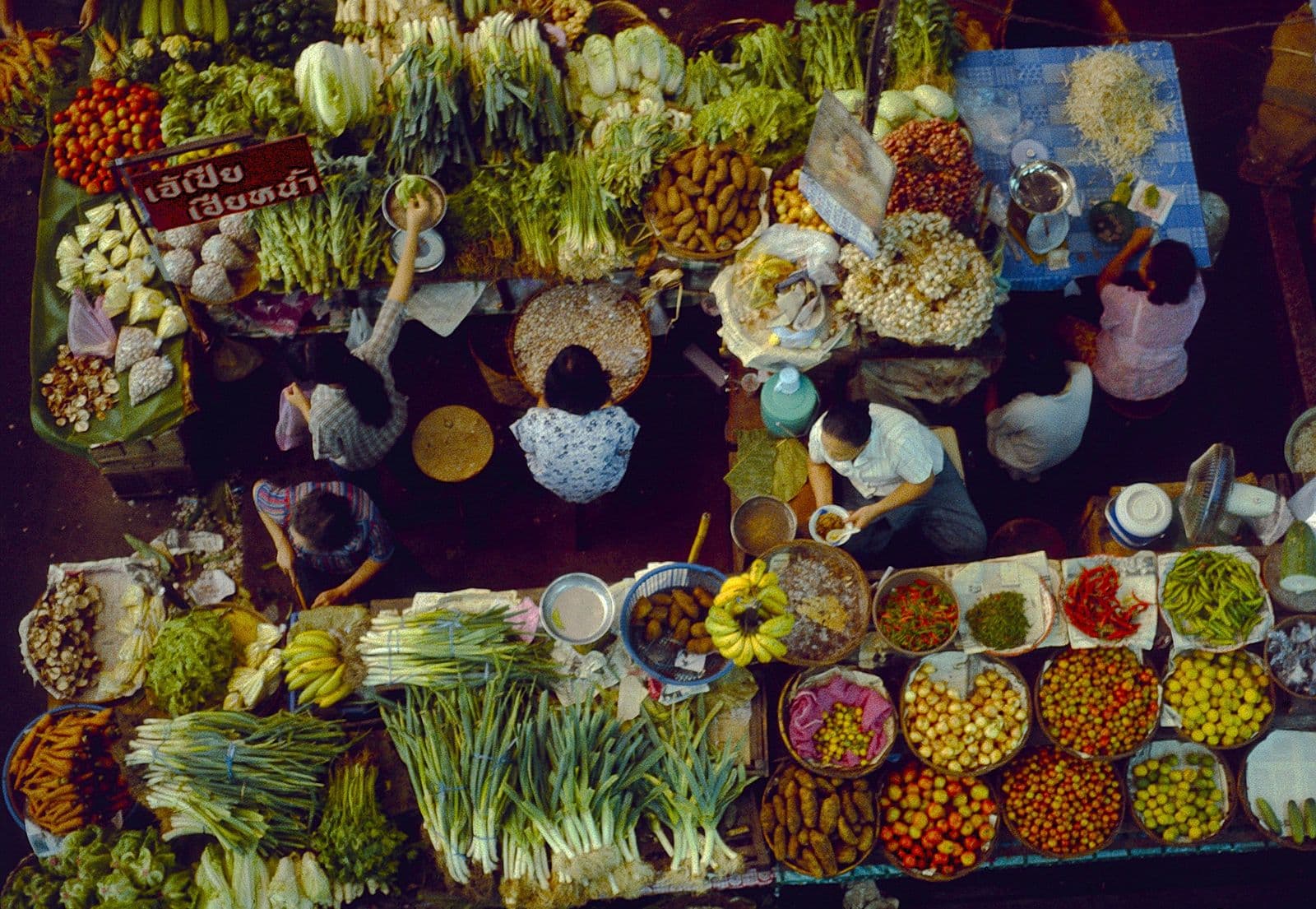
To see what Chiang Mai people eat day to day, head into Warorot Market, known locally as Kad Luang. The ground floor is packed with northern staples: big bags of puffy pork crackling, pale green nam prik num chili dip, orange-red nam prik ong, banana-leaf parcels of fermented pork, and coils of sai ua sausage fragrant with lemongrass and kaffir lime leaf. Right next to it along the Ping River is Ton Lamyai Market, which sells fresh flowers all day in colors so bright you'll stop for photos every few steps. Our trick: buy a little sai ua, nam prik num and pork crackling, grab some sticky rice from a neighboring stall, and eat it on a bench by the river — it's tastier and more atmospheric than most sit-down restaurants. Leave souvenir shopping for your last day, though: fresh nam prik num doesn't keep nearly as long as people assume.
Hang Le Curry with Hot Sticky Rice: The Dish Visitors Overlook
Khao soi may be the star, but if you ask which dish best captures northern Thai cooking, we'd pick gaeng hang le. Pork belly and pork collar are simmered in a dark brown curry until they melt, with shredded ginger and pickled garlic for warmth, tamarind for a sweet-sour edge — and not a drop of coconut milk, which puts it worlds apart from central Thai curries. The style has Burmese roots, and it gets better overnight, which is why local curry shops often serve it from a pot started the day before. The right way to eat it is to roll sticky rice into small balls, dip them into the curry, and follow with blanched vegetables and nam prik ong. If you don't eat pork, you're a bit out of luck, since almost every shop makes hang le with pork. Try gaeng khae gai instead — a fiery jungle-vegetable curry with chicken that outsiders rarely know but northerners eat all the time.
Khantoke Dinner or a Local Curry Shop: Which Should You Choose?
One question we hear a lot is whether a khantoke dinner is worth it. The honest answer: it depends on what you're after. Khantoke means sitting on the floor around a low wooden tray set with small bowls of hang le curry, nam prik ong, pork crackling and fried chicken, often with traditional northern dance performed during the meal. It's great for first-timers, families and anyone traveling with older relatives, because you get food and culture in one evening. But the flavors are usually toned down for visitors. If you're serious about food, a lunchtime northern curry shop gets you much closer to home cooking. These places line up their curry pots out front so you can point at three or four, the prices are a fraction of a show dinner, and like khao soi shops they often sell out before the afternoon. Our favorite plan: local curry shop for lunch, and save khantoke for an evening when you want to rest your legs and enjoy a show.
The Sunday Walking Street: Grazing from Tha Phae Gate Until the Lights Go Out
If your trip includes a Sunday evening, don't book dinner anywhere in advance. The walking street that runs from Tha Phae Gate deep into the Old City is the best open-air buffet in town. Food stalls spill into temple courtyards where you can sit down, selling khanom jeen nam ngiao, charcoal-grilled sai ua, grilled rice crackers, coconut pancakes and fruit shakes to carry as you walk. The downside is the crowd — by around 8 p.m. you're practically walking in a queue. Our approach is to arrive while vendors are still setting up, do one lap to scout what looks good, then circle back to buy. If you're not in town on a Sunday, the Wua Lai walking street in the silversmith quarter runs on Saturdays; it has a similar vibe but is smaller and easier to walk.
Late-Night Eats at Chang Phueak Gate, and Cafés in Nimman
When the stalls around the Old City start closing, locals move north to the night market near Chang Phueak Gate on the northern side of the moat. Carts and food stalls open from early evening until late, and the headline act is a stewed pork leg on rice stall that draws a long queue every night. There's also rice porridge, boiled rice soup and Thai-style suki — perfect for a second dinner after a long day of walking. For a break from northern food, the Nimmanhaemin area is a different world: pour-over coffee from beans grown in the northern hills, cute dessert cafés and international restaurants that are hard to find in the Old City. One small observation of ours: the coffee here is good enough to take beans home, but authentic northern dishes usually taste better once you cross back to the Old City side.
Nam Ngiao, Rice Noodles and Northern Sweets for Your List
There are plenty of other dishes you shouldn't leave without trying. Khanom jeen nam ngiao — rice noodles in a clear red broth made with tomatoes, cubes of pork blood and dried kapok flowers with a texture all their own — is as much a northern breakfast as khao soi. Northern-style laab, dry-fried with makhwaen pepper, has a tingly, citrusy aroma that surprises anyone used to central Thai food. For something sweet, look for khao taen rice crackers drizzled with palm sugar, and khanom jok, sticky rice dough wrapped in banana leaf around a fragrant coconut filling, sold at morning markets. If you have time to continue further north, Chiang Rai has its own versions of khao soi and nam ngiao — read our Chiang Rai itinerary covering the White Temple, Blue Temple and Doi Mae Salong to plan the next leg, since it's only a few hours by road from Chiang Mai.
When to Visit for the Best Eating, and Where to Stay to Eat on Foot
The cool season around the end and start of the year is the most comfortable time to eat your way around the city, and hot khao soi on a misty morning tastes even better. It's also the busiest period, with the highest room rates. Early rainy season brings lower prices and fewer crowds — just keep an umbrella handy. Chiang Mai's airport is close to the city, so a taxi or ride-hailing car gets you to the Old City quickly. For a food-focused trip, we recommend staying in the Old City or near Tha Phae Gate, where you can walk to khao soi shops, markets and the walking streets. If you haven't booked yet, check Bangkok to Chiang Mai flights first, then book a hotel in Chiang Mai's Old City on Trip.com so your first bowl of khao soi is just a short stroll away.
Map of Chiang Mai
Ready to book this trip? Check the latest prices and availability now.
Check hotels in Chiang MaiFrequently Asked Questions
What time of day should I eat khao soi in Chiang Mai?
Late morning to lunchtime is best. Many traditional khao soi shops open early and often sell out or close in the afternoon, so if you're hungry in the evening you may need to rely on all-day northern Thai restaurants instead.
Is a khantoke dinner worth it, or should I eat at a local curry shop?
For a first visit, khantoke is a fun way to get food and a cultural show in one evening. If you want the flavors locals actually eat day to day at a much lower price, a lunchtime northern-style curry-and-rice shop is better value.
Where should food lovers stay in Chiang Mai?
The Old City or the area around Tha Phae Gate puts you within walking distance of markets, the walking streets and plenty of khao soi shops. Nimman suits travelers who care more about cafés and modern restaurants.
Keep Reading
 📷 Dmitriy CauseLove / Pexels
Yaowarat Street Food Guide — Best Eats in Bangkok's Chinatown
A guide to Bangkok's Yaowarat Chinatown street food scene — from stir-fried noodles to oyster omelets and dim sum, plus when to go and how to get there.
 📷 Macros Guy / Pexels
What to Eat in Phuket Old Town — Local Dishes You Have to Try
A guide to Phuket Old Town's local food scene amid colorful Sino-Portuguese buildings — from mee hokkien to oh tao and moo hong, plus the best time to visit.
 📷 Water White / Pexels
What to Eat in Tsim Sha Tsui, Hong Kong: A Weekend Food Guide
The best eats in Tsim Sha Tsui, Hong Kong, for a short weekend trip — all within walking distance of the Star Ferry pier.