
Hanoi Street Food Guide: What to Eat in the Old Quarter, from Pho to Egg Coffee
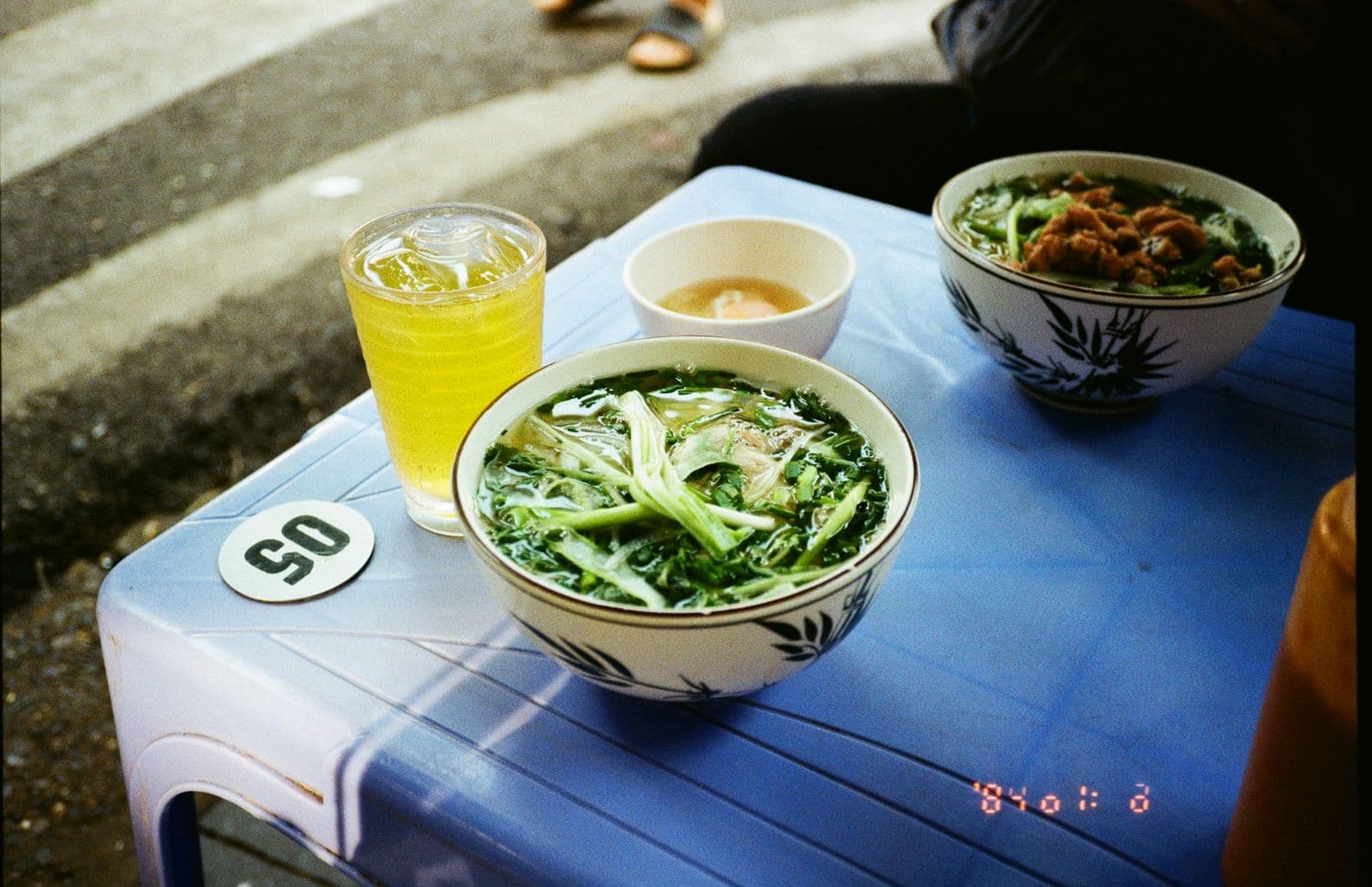
Photo by Trammese / Pexels
Mornings in Hanoi begin before sunrise. Before the first scooter roars past, pots of beef-bone broth on street-corner charcoal stoves have already been simmering all night. Office workers squat on plastic stools barely off the ground, heads bowed over steaming pho before riding off into the day. Hanoi is a city where the best food often has no sign, no English menu, and has been selling a single dish for decades. That's exactly why people keep coming back — and why first-timers so often walk straight past great stalls without noticing. This guide is organized by what to eat at each point in the day, along with how to spot the right place.
The unwritten rules of Hanoi street stalls
Most places in the Old Quarter sell one dish, so the shop name is usually just that dish plus a street number. Sit down and hold up fingers for the number of bowls — no menu required. The tiny plastic stools aren't an inconvenience, they're the custom. The more locals crammed in out front, the better the sign that ingredients are fresh and moving fast. Places with staff out front waving multi-page picture menus at tourists are worth walking past, at least at first. And always carry small bills: many small stalls struggle to break large notes.
Breakfast pho: a clear broth that needs very little help
Hanoi pho is different from the southern-style pho many visitors know. The broth is crystal clear, lightly scented with star anise and charred ginger, served with soft flat noodles, beef that's either cooked through or flash-blanched, and a scattering of sliced spring onion — no giant plate of herbs on the side. Hanoians believe the broth is the star, so they add just fresh chili, garlic vinegar or a squeeze of lime. Taste a spoonful of plain broth before you season it and you'll understand why some stalls sell out by mid-morning. Also try chicken pho: lighter and naturally sweet, perfect on a cool morning late in the year.
Bun cha: lunch in a lane full of pork smoke
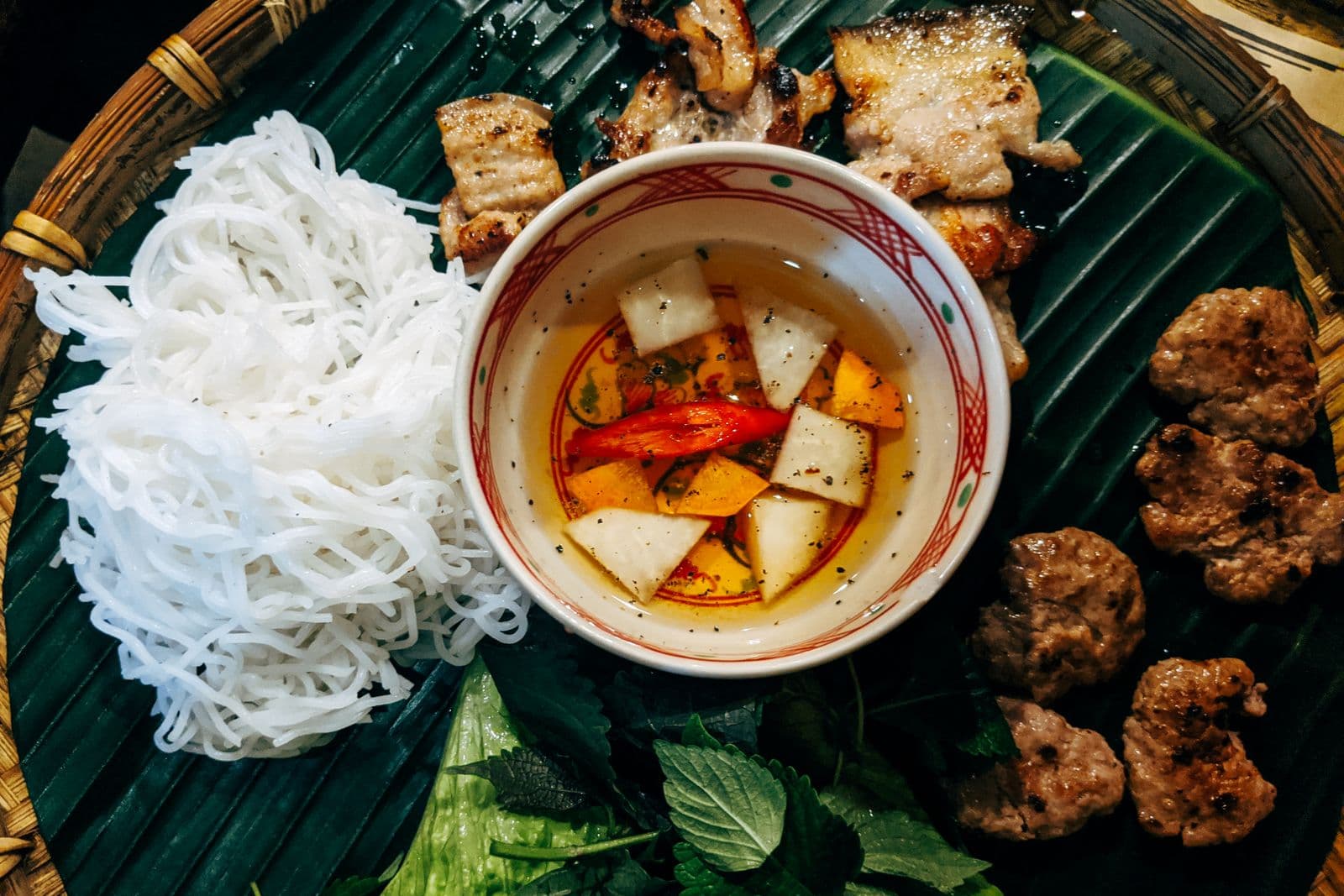
As noon approaches, the smell of pork grilling over charcoal drifts through Hanoi's Old Quarter — the signal that it's bun cha time. Minced pork patties and marinated pork belly are grilled until the edges char, then served in a bowl of warm, sweet-and-sour dipping broth with thin slices of green papaya floating in it. On the side comes a plate of white rice vermicelli and a basket of herbs. Dip noodles and herbs into the broth, then scoop them up with the pork in one bite. The local move is to add a small plate of fried spring rolls and dunk them in the same broth. Worth knowing: many bun cha stalls only serve at lunchtime and then close, so if you're planning it for dinner you may be disappointed.
Cha Ca Street: turmeric fish that gave a street its name
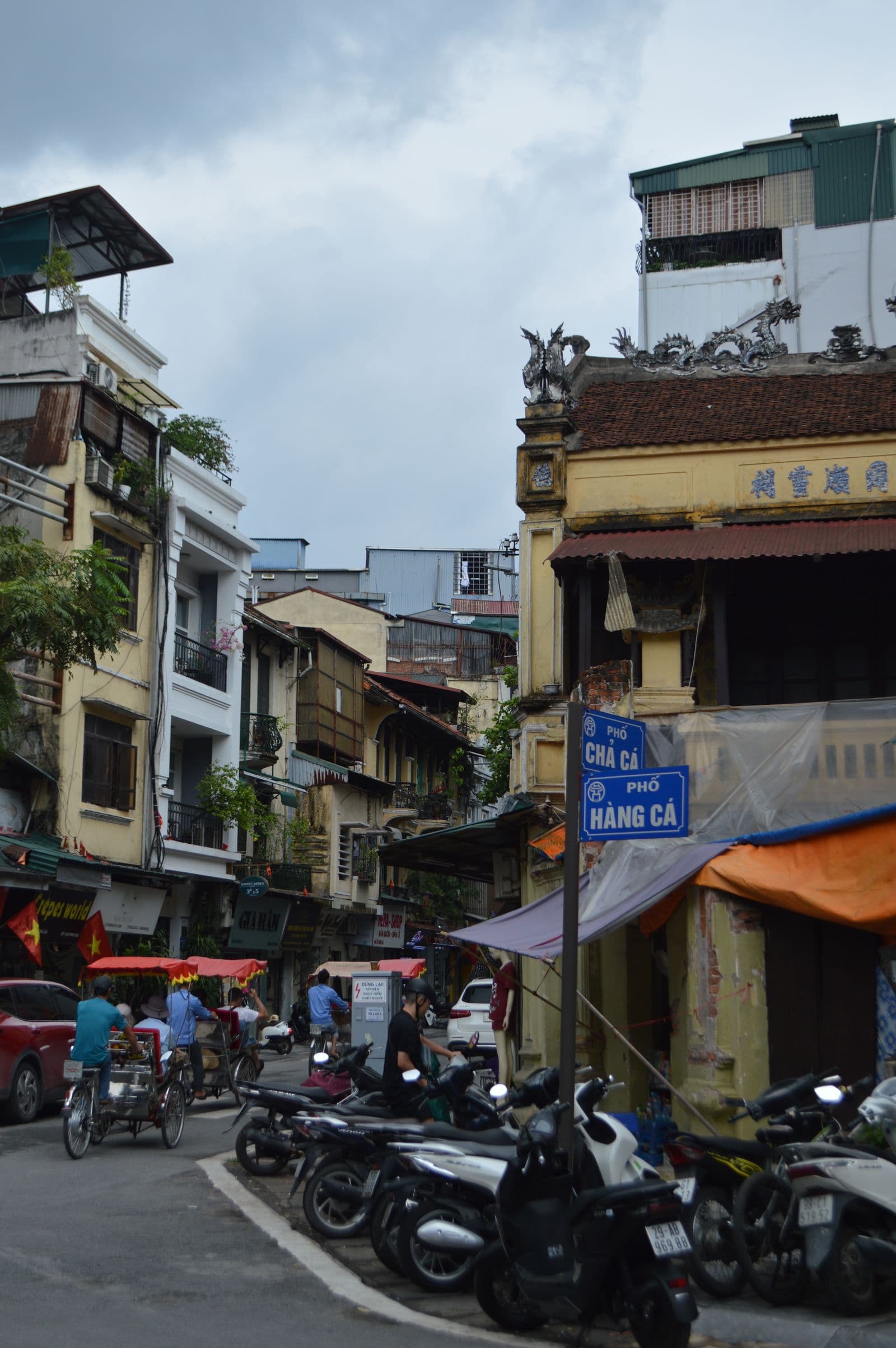
In the Old Quarter there's a short street called Cha Ca Street, named after the dish that has been sold here for generations. Cha ca is white fish marinated in turmeric and galangal, grilled, then finished in a small pan over a charcoal burner at your table, where heaps of dill and spring onion go in until they wilt. You eat it with rice vermicelli, roasted peanuts and shrimp paste or chili fish sauce. It has to be eaten hot, straight off the burner. Our advice: cha ca works better for a group than a solo traveler, because most places serve it as a set — with two or more people it's far better value.
Egg coffee: dessert in a coffee cup
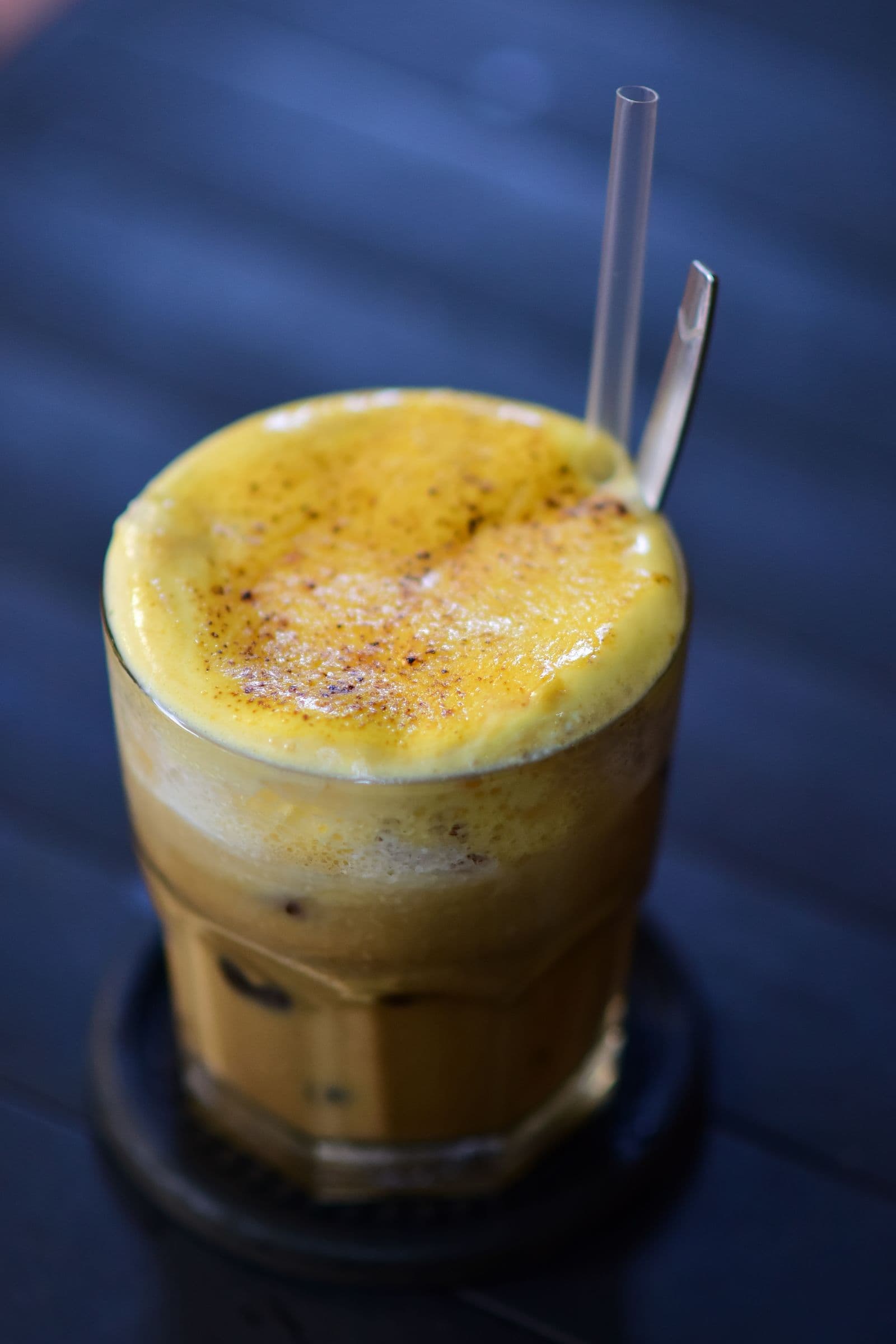
Late in the afternoon, when your legs start to give out, look for one of those small cafés reached through a narrow alley and up a flight of stairs, and order an egg coffee — a drink born in Hanoi. Strong black coffee sits at the bottom, capped with egg yolk whipped with condensed milk until silky and airy. It tastes closer to custard than coffee. The hot version often arrives sitting in a bowl of hot water to keep it warm; there's an iced version too, but on an overcast day we think hot is the answer. If you don't like things too sweet, try coconut coffee or a Vietnamese iced black coffee instead — strong enough to keep you wide awake all afternoon.
Snacks along the way: banh mi to banh cuon
Between big meals, Hanoi keeps the snacks coming. Banh mi here has a thin, crackly crust, with a less stuffed but punchier filling than in the south. Banh cuon are silky steamed rice sheets wrapped around minced pork and wood ear mushroom, topped with fried shallots and dipped in sweetened fish sauce — so soft they melt in your mouth, and another local breakfast favorite. And if you pass a morning cart selling sticky rice with various toppings, grab a parcel: it's a cheap, filling snack to eat as you stroll around Hoan Kiem Lake.
Evenings on Beer Street, or a quieter corner
At night the Old Quarter is liveliest around Ta Hien Street, better known to visitors as Beer Street. Plastic stools spill into the road, and people sip cheap fresh beer brewed daily alongside roasted peanuts, fried spring rolls and garlic-fried beef. It's fun, but loud and very crowded, especially on weekend nights. For a more local experience, walk two or three blocks away and find a small fresh-beer spot on a corner where only Vietnamese customers are sitting. The beer is the same; the atmosphere is calmer and far more genuine.
When to go, and where to stay within walking distance of it all
Hanoi has more distinct seasons than other Vietnamese cities. Late September to November brings cool, clear weather — the best time for eating your way around on foot. Winter early in the year is cool and damp, which makes hot pho taste twice as good, while summer is hot and sticky, so eat mainly in the mornings and early evenings. From Noi Bai Airport, a taxi or ride-hailing car is the easiest way into town. If food is the main reason you are going, the Old Quarter or the streets around Hoan Kiem Lake give you the biggest advantage. To compare northern Vietnamese food with the center of the country, read our Da Nang street food guide next — and before you fly, book a stay in Hanoi's Old Quarter on Trip.com so your new favorite pho stall is just around the corner from night one.
Map of Hanoi, Vietnam
Ready to book this trip? Check the latest prices and availability now.
Check stays in Hanoi's Old QuarterFrequently Asked Questions
How is Hanoi pho different from pho in southern Vietnam?
Hanoi pho has a clear, subtle broth and usually comes topped with sliced spring onion, without the big plate of fresh herbs served in the south. Locals treat the broth as the star and add only a little chili, garlic vinegar or lime.
Is street food in Hanoi safe to eat?
Generally, stalls packed with locals turn over their ingredients quickly and tend to be fresh. If you have a sensitive stomach, go easy on raw herbs and ice for the first day or two, and bring any medication you usually need.
Where should I stay in Hanoi for a food-focused visit?
The Old Quarter near Hoan Kiem Lake. Most of the best pho, bun cha, egg coffee and fresh beer spots are a few minutes' walk away, from early morning until late at night.
Keep Reading
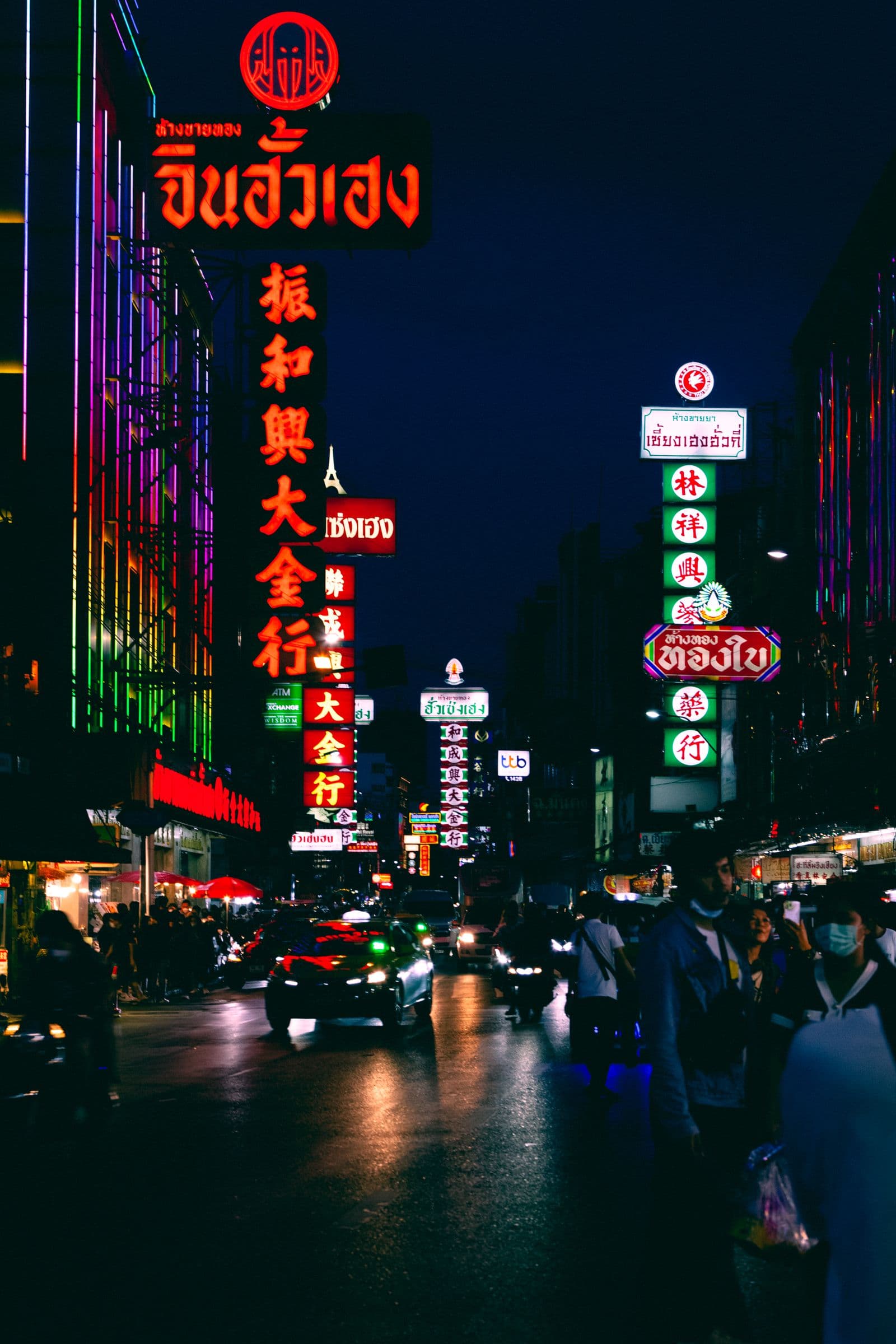 📷 Dmitriy CauseLove / Pexels
Yaowarat Street Food Guide — Best Eats in Bangkok's Chinatown
A guide to Bangkok's Yaowarat Chinatown street food scene — from stir-fried noodles to oyster omelets and dim sum, plus when to go and how to get there.
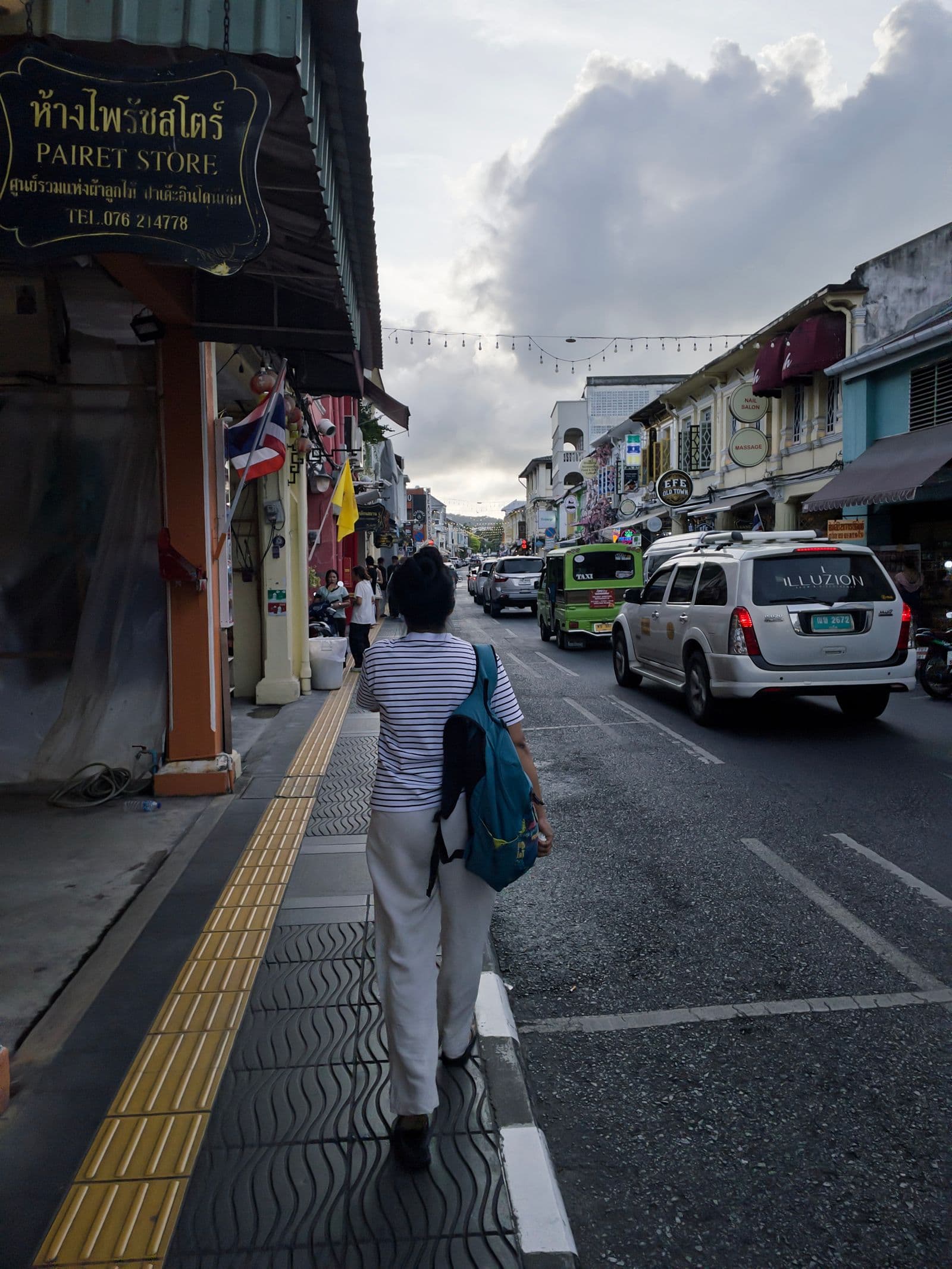 📷 Macros Guy / Pexels
What to Eat in Phuket Old Town — Local Dishes You Have to Try
A guide to Phuket Old Town's local food scene amid colorful Sino-Portuguese buildings — from mee hokkien to oh tao and moo hong, plus the best time to visit.
 📷 Water White / Pexels
What to Eat in Tsim Sha Tsui, Hong Kong: A Weekend Food Guide
The best eats in Tsim Sha Tsui, Hong Kong, for a short weekend trip — all within walking distance of the Star Ferry pier.