
Nara in One Day from Kyoto or Osaka: Deer Park, Todaiji and Itinerary
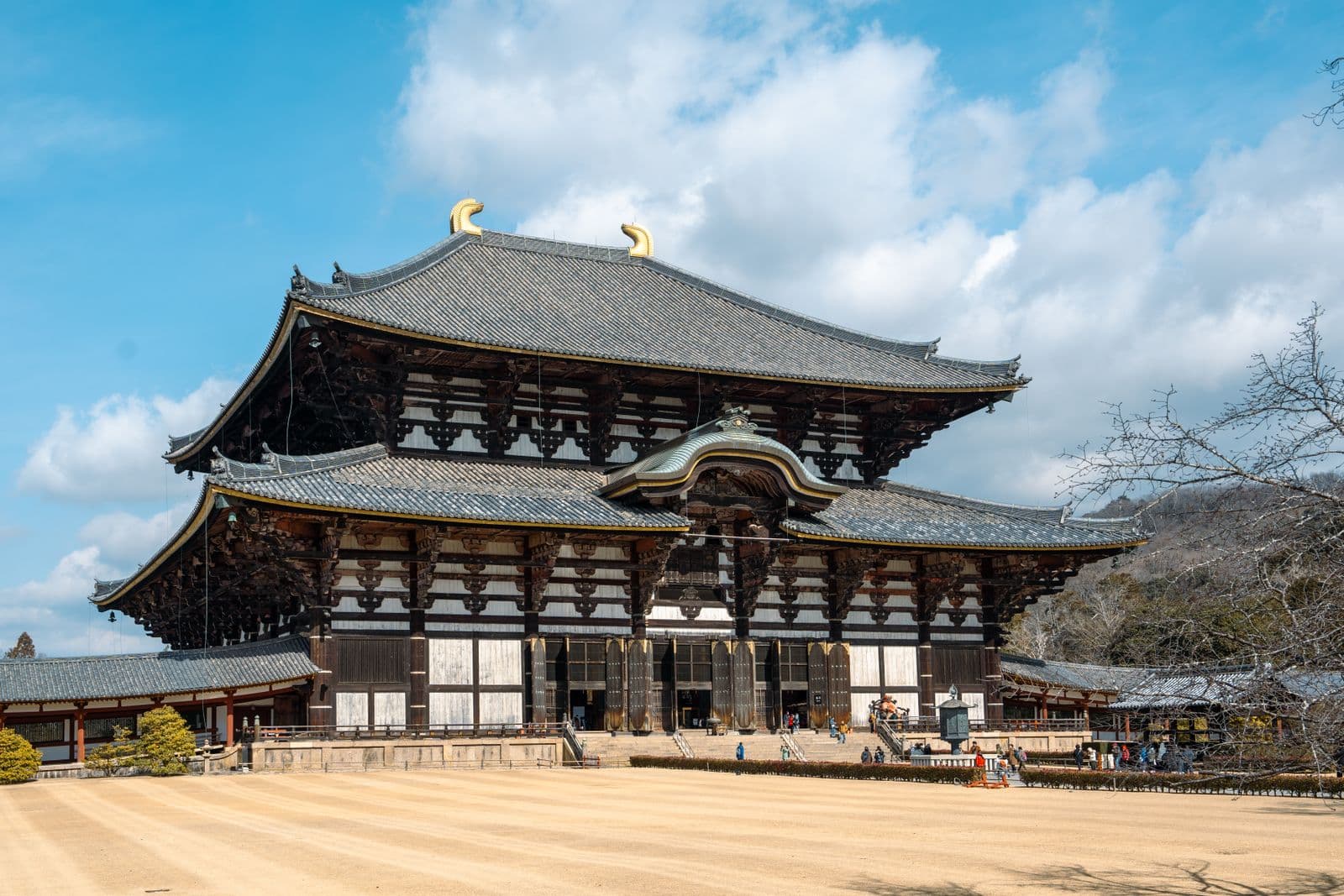
Photo by Sheldon Li / Pexels
The first deer we met stood at a temple gate like a ticket inspector. Spotting the crackers in our hand, it lowered its head in a slow bow, waited for us to bow back, then politely took its snack — before immediately headbutting our bag the moment it realized there were more inside. That's Nara in one short scene: Japan's ancient capital, peaceful, sacred and funny all at once. It's under an hour by train from both Kyoto and Osaka, which makes it the most popular day trip in the Kansai region, but most people rush it — deer selfie, big temple, straight back. This guide helps you get more out of a day in Nara: the order to walk it in, the spots most visitors skip, and the deer etiquette nobody mentions in the brochures.
Which Train to Take, and Which Station Saves Your Legs
From both Kyoto and Osaka you have two main options: a JR train, or the private railway line that runs into the station in central Nara. The biggest difference isn't price or speed — it's where you get off. The private line's station is much closer to Nara Park; within a few minutes of walking out you'll start seeing deer. The JR station sits farther west, so you'll need to walk or take a bus for another stretch. Our take: unless you're already carrying a JR pass, just take the private line and save your legs for the park. From Osaka, boarding in Namba is the most convenient. Aim to arrive in Nara before 9 a.m. — after around 10, the tour buses start rolling in and the area fills up fast.
Nara Park and Its Thousand-Plus Deer: Etiquette Before You Hand Over a Cracker
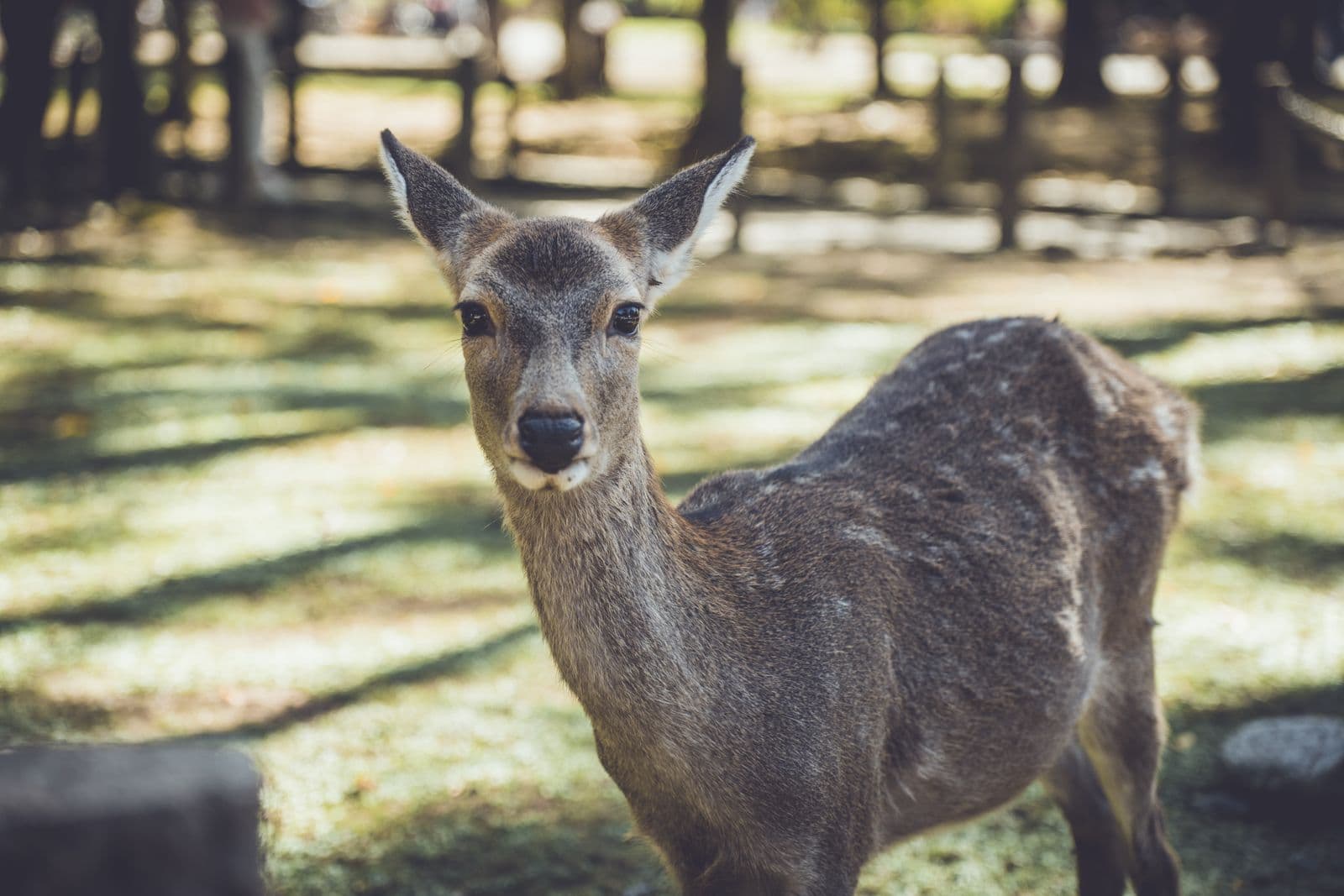
The deer of Nara Park aren't pets. They're protected wild animals, traditionally regarded as messengers of the gods, and they roam freely through the park, the temples and even the crosswalks. Flat, round deer crackers are sold at stalls around the park. Once you've bought some, don't hold them up for long or you'll be mobbed; give one at a time, then show your empty hands to signal you're done. What many people don't know is that deer love to chew paper, maps and plastic bags, so keep those zipped away. In autumn the stags get noticeably more short-tempered, so be especially careful around the ones with antlers. With small kids, we'd suggest an adult holds the crackers — a big deer is nearly as tall as a child and pushes harder than you'd expect. For photos without other tourists in the frame, wander deeper into the grassy eastern part of the park, where the deer are lazier and stay still long enough to shoot.
Todaiji: The Wooden Hall That Stops You in Your Tracks
Deeper into the park you reach a towering wooden gate guarded by two fierce carved guardian statues, so imposing you'll stand there staring up for a while. This is the entrance to Todaiji Temple, the heart of Nara for well over a thousand years. The main hall is an enormous wooden structure housing a giant bronze Buddha that makes everyone feel small. Mornings, when light falls through the upper window onto the Buddha's face, are the quietest and most beautiful time to visit. Behind the statue is a wooden pillar with a hole said to be the size of the Buddha's nostril; squeeze through and you'll supposedly have good luck. Kids slip through easily, while bigger adults might want to think twice. If you still have energy, climb the slope behind the temple to a wooden hall on the hillside with a wide view over Nara's rooftops — a viewpoint most visitors never make it up to.
The Stone-Lantern Path to Kasuga Taisha, Nara's Quietest Hour
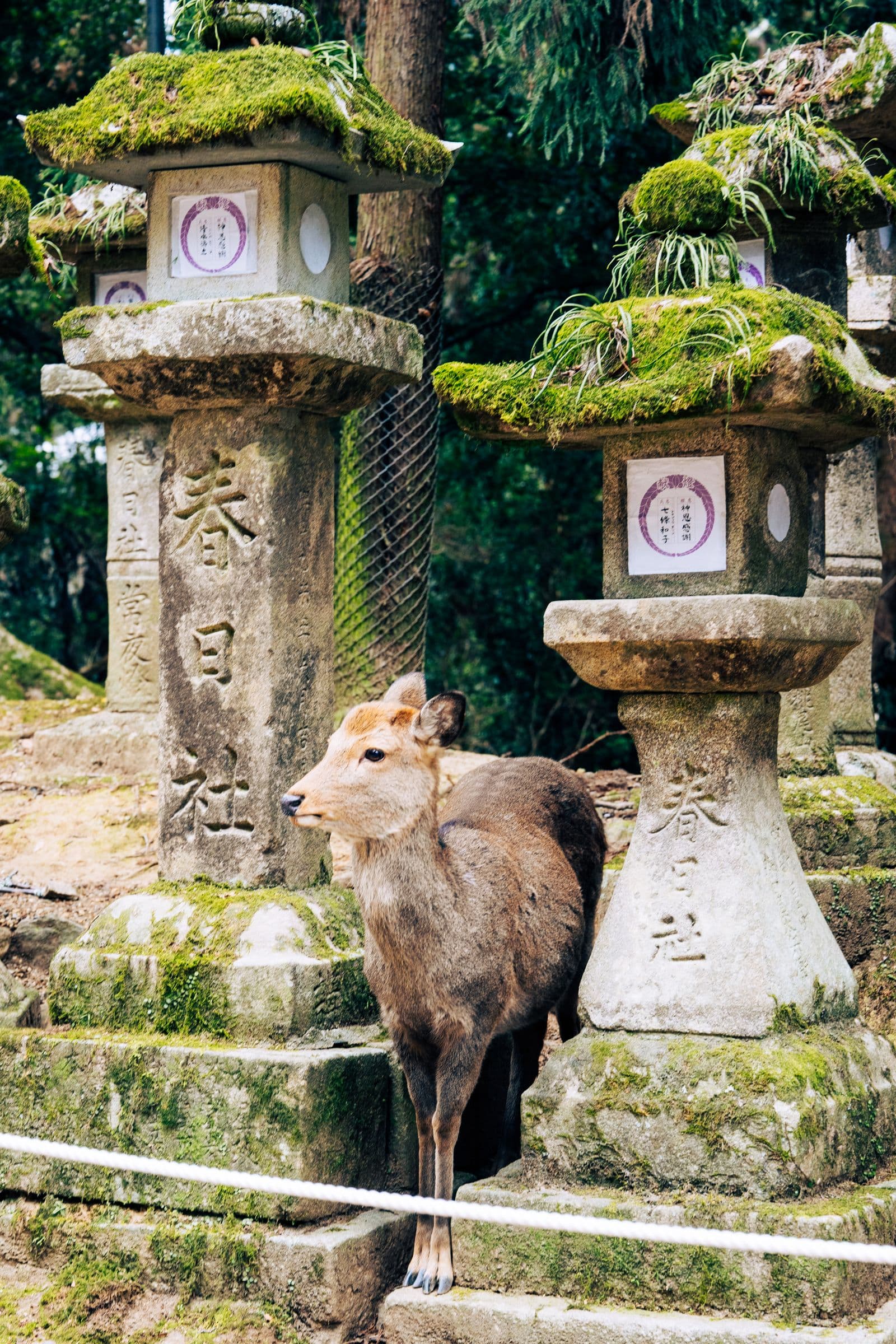
If we had to pick one place in Nara that feels like slipping into another era, it would be the walk to Kasuga Taisha. A gravel path winds through a forest of tall trees, lined with thousands of stone lanterns so thickly covered in moss they look like they've grown out of the ground. Deer wander past unhurried. The shrine itself is painted vivid vermilion, contrasting with rows of bronze lanterns hanging along its corridors. Our tip is to save this for late afternoon, after the morning crowds have gone. Sunlight filtering through the leaves stripes the stone lanterns, and it's so still you can hear hooves crunching on fallen leaves. Arrive at noon on a hot, crowded day and it feels completely different.
Kofukuji's Five-Story Pagoda and Its Reflection in Sarusawa Pond
Near the private-line station, on the way into the park, is another temple people tend to hurry past: Kofukuji. Its tall, slender five-story wooden pagoda is as much a symbol of Nara as the deer. Walk down the steps to the south and you'll find Sarusawa Pond, a small pond fringed with weeping willows. On a windless day the pagoda reflects perfectly in the water — a classic shot photographers wait for in the morning. If you arrive early enough, we suggest starting your day here before heading into the deer park: it's right on the route, and morning light from behind the pagoda gives much better photos than the backlit afternoon.
Naramachi: The Old Merchant Quarter Worth Saving for Lunch
The restaurants around Nara Park are convenient, but they're usually crowded and tourist-focused. For a lunch with more atmosphere, walk south to Naramachi, the old merchant quarter of narrow-fronted wooden townhouses that stretch deep inside. Many have been turned into cafés, sweet shops and craft stores. Nara's signature dish is kakinoha-zushi — salt-cured fish pressed onto rice and wrapped in persimmon leaves, which give it a subtle fragrance — and it travels well if you want to eat it on the train. Another must is on the shopping street between the station and this area: yomogi mochi pounded fresh in front of you, so fast that crowds gather outside the shop. The warm mochi is soft and chewy with just-sweet-enough red bean inside. Naramachi is also a short walk from the station, making it a natural last stop before the ride home.
A One-Day Route That Won't Wear You Out, and the Best Seasons
The plan we use, and find easiest on the legs: arrive in the morning, stop at Kofukuji and Sarusawa Pond, walk into Nara Park to feed the deer, head to Todaiji before late morning, climb the hill for the view if your legs allow, then loop down to Kasuga Taisha in the afternoon. Finish in Naramachi with sweets and tea before walking back to the station. It's all doable on foot, but the total distance adds up, so comfortable shoes make a big difference. As for seasons, spring brings cherry blossoms across the park, and late autumn turns the maples and ginkgoes into the most beautiful scene of the year — along with the biggest crowds. Winter is quiet and crisp, while summer is hot and humid, so plan an afternoon break in a temple hall or café.
Stay Overnight in Nara or Head Back to Kyoto?
Most people visit Nara as a day trip, and that's enough for all the main sights. But if you have time to spare, one night in Nara is a different experience. In the evening, once the day-trippers have gone, the deer park is quiet enough to hear the wind, and early the next morning you'll have the park almost to yourself and the deer. The trade-off is that Nara has far fewer hotels and evening dining options than the big cities. For a typical Kansai trip, we recommend basing yourself in Kyoto or Osaka and doing Nara as a day trip. If you're choosing where to stay in Kyoto, read our guide on where to stay in Kyoto: Gion vs Kyoto Station — staying near the station makes the train to Nara easiest. Once you've settled on an area, book a hotel in Kyoto on Trip.com, or if you'd rather have someone guide you, browse tours and activities in Nara that cover several sights in a single day.
Map of Nara, Japan
Ready to book this trip? Check the latest prices and availability now.
See tours and activities in NaraFrequently Asked Questions
How much time do you need in Nara?
A full day covers the highlights — Nara Park, Todaiji, Kasuga Taisha and Naramachi. If you'd like a slower pace or want to see the deer park early in the morning before the crowds arrive, one night in Nara is worth it.
Which train should I take to Nara from Kyoto or Osaka?
The private railway line that terminates at the central Nara station drops you much closer to Nara Park, so you can start walking right away. The JR line makes sense if you already hold a rail pass, but its station is a bit farther from the park.
Is it dangerous to feed the deer in Nara?
Generally no, but some deer will push, headbutt or nibble clothing once they see crackers. Hand them over one at a time, don't wave them around, keep paper and plastic bags out of reach, and take extra care in autumn when the stags are more irritable.
Keep Reading
 📷 มหฺ ปณฺฑิโต / Pexels
3-Day Chiang Mai Nature Itinerary — Where to Go
A nature-focused Chiang Mai itinerary covering Doi Suthep, Mon Cham, and outdoor spots you shouldn't miss.
 📷 Vyacheslav Argenberg / Wikimedia Commons
How Many Days for Koh Lipe? Andaman Sea Clarity You Have to See
A Koh Lipe trip planner — how many days to spend, diving and snorkeling highlights, white-sand beaches, and the best time of year to visit.
 📷 Tito Zzzz / Pexels
Siguniang Mountain, Sichuan: China's Trekking Gem Near Chengdu
Meet Siguniang Mountain, the snow-capped range in Sichuan trekkers call the 'Alps of the East' — here's how to reach it from Chengdu.